skip to main |
skip to sidebar
dhs merges with dod/nsa under obama's cyber threat plan from kurt nimmo
:
Obama has proposed legislation that will give the Department of Homeland Security more “autonomy” in its effort to protect civilian computer networks from ostensible cyber attack, according to Information Week. White House officials testified Monday before the Senate Committee on Homeland Security and Governmental Affairs about the comprehensive plan presented by the administration two weeks ago to create legislation to protect critical infrastructure and networks. It will merge operations with the Pentagon.
“One key aspect of the plan is to put the DHS’s mission to protect U.S. federal civilian networks on par with the DOD’s mission to protect U.S. military networks, giving the DHS more autonomy to act against cyberthreats on behalf of the government than before,” writes Elizabeth Montalbano for the technology publication.
DHS has also sought to merge the effort with the NSA and various civilian operations.
Last October, the Obama administration adopted new procedures for using the Defense Department’s vast array of cyberwarfare capabilities in case of an attack on vital computer networks inside the United States, “delicately navigating historic rules that restrict military action on American soil,” according to the New York Times.
According to the Times, a team of military networking experts would be assigned to the operations center at the Homeland Security Department. The new approach will begin with a Department of Homeland Security team deploying to Fort Meade, Maryland, home to both the National Security Agency, which specializes in electronic espionage, and the military’s new Cyber Command.
At the time, government officials said the new rules contain “a rapid response to a cyberthreat while balancing concerns that civil liberties might be at risk should the military take over such domestic operations,” in other words the government announced effort to protect against the hyped threat of cyber terrorism would require a sacrifice of liberty.
The DHS plan announced on Monday will give “the DHS – recognizing our similar role to DOD with regard to federal civilian networks – similar authority with regard to personnel so we can bring them on board rapidly,” Philip R. Reitinger, deputy undersecretary for the DHS National Protection and Programs Directorate, told Congress.
The plan also gives DHS “much clearer authority and responsibility to work in a voluntary way” with the private sector, something it already has been doing, Reitinger added.
In 2009, Pentagon spokesman Bryan Whitman sidestepped answering if the Pentagon’s cyber command would be capable of offensive operations as well as protecting the Department of Defense. “This command is going to focus on the protection and operation of DoD’s networks,” he said. “This command is going to do what is necessary to be able to do that.”
In 2006, a Pentagon document entitled the Information Operation Roadmap was released to the public after a Freedom of Information Request by the National Security Archive at George Washington University. It states that the Pentagon has developed a “robust offensive suite of capabilities to include full-range electronic and computer network attack… We Must Fight the Net.”related updates: facebook & google join forces to oppose privacy bill* 18 places censored by google maps:
from aberdeen proving grounds in maryland to... north korea*
nsa collects as much data as is stored in the entire library of congress every 6hrs?*
video:
nsa whistleblower tom drake talks espionage act, 9/11 & intel with '60 minutes'*
while they reap windfall profits...  from antifascist calling
:
Recent revelations that Apple's iPhone and iPad, Google's Android and Microsoft's Windows Phone 7 operating systems collect, store and transmit records of users' physical locations to central databases--secretly, and without consent--have ignited a firestorm over Americans' privacy rights in an age of hypersurveillance.
And with a lawsuit filed last week in U.S. District Court in Florida by two iPhone users, The Register reports, Apple guru Steve Jobs was forced to respond to complaints after the firm's usual tactic--deafening silence--failed to assuage customer's anxieties.
The lawsuit alleges that "irreparable injury has resulted and continues to result from Apple's unauthorized tracking of millions of Americans," plaintiffs Vikram Ajjampur and William Devito averred. They are requesting their case be granted class-action status, a move likely to send shudders along the silicon spine of the secretive Cupertino high-tech powerhouse.
In response to the outcry, The Wall Street Journal reported that Apple "is scaling back how much information its iPhones store about where they have been and said it will stop collecting such data when consumers request it, as the company tries to quell concerns it was tracking iPhone owners."
But as journalists Yukari Iwatani Kane and Jennifer Valentino-Devries point out, "a week of silence on the growing controversy, raised new questions and criticism about its data-handling practices."related video: assange calls facebook 'most appalling spy machine' ever
 from threat level
:
It was a year without parallel. Threat Level’s bread-and-butter themes of censorship, hacking, security, privacy, copyright and cyberwar were all represented in tug-of-war struggles with unprecedented outcomes.
Google defeated China’s censors, but caved to corporate censorship in the United States. The largest computer-crime case ever prosecuted ended in the nation’s longest prison term. A small-time Xbox modder who advertised his services online beat the federal rap. And a mysterious computer virus called Stuxnet finally put proof to decades of warnings that malware will eventually be used to kinetic effect in the real world.
A myriad of court decisions seemed to be a boon for online rights, while others clearly were a step backward. The year 2010 saw the rise of the newspaper copyright troll, and judges pushed back on absurd jury verdicts for music file sharing and outdated electronic spying rules.
And a secret-spilling website flirting with insolvency and dissolution suddenly burst onto the world stage. WikiLeaks was without a doubt the biggest 2010 development in Threat Level’s world.related: cyber-warfare centre coming, germany says
google this: the price of violating privacy  from national post
:
Google Inc. violated Canadian privacy law by collecting personal information from unsecured wireless networks across the country for its Street View service, Canada’s Privacy Commissioner said Tuesday.
“Our investigation shows that Google did capture personal information - and, in some cases, highly sensitive personal information such as complete emails,” said Jennifer Stoddart, Privacy Commissioner of Canada, in a statement. “This incident was a serious violation of Canadians’ privacy rights,” she said.
Noting that thousands of Canadians were likely affected, Ms. Stoddart said personal information collected by Google’s iconic Street View cars included complete emails, email addresses, user names and passwords, names and residential telephone numbers and addresses. Some particularly sensitive information was also inadvertently captured, such as a list of people suffering from certain medical conditions complete with their full names and contact information...
Ms. Stoddart has given the world’s largest search engine a deadline of Feb. 1 to delete all offending Canadian data. She said her office will allow Google to keep any data relevant to ongoing legal proceedings as long as the data are secured and access is restricted. The company, which has already secured and restricted access to the Canadian payload data, is currently facing a number of lawsuits in the United States related to its Street View data-collection methods.judge clears captcha-breaking case for criminal trial eu may propose criminal sanctions, fines for data privacy casesfrom bloomberg:
European Union regulators may propose expanded criminal penalties to enforce data protection rules that limit what companies and governments can do with personal information. People should also have the right to have their details deleted and to remove lists of friends, photos or medical records, according to a European Commission document obtained by Bloomberg. The proposals may also make it easier for data protection authorities and consumer groups to file lawsuits over privacy breaches.
Google Inc. and Facebook Inc. are among several Internet companies that have come under European scrutiny for possible privacy breaches. Data-protection officials have criticized Facebook, the largest social-networking site, for putting users’ personal information and privacy at risk with recent policy changes. It’s “essential to have effective provisions on remedies and sanctions” including “criminal sanctions in case of serious data protection violations,” the paper from the EU’s executive agency says.
Privacy violations can be punished with jail time in Italy, where a court in February sentenced three Google officials to six-month terms, which were suspended. They were held responsible after a group of Turin school students filmed themselves bullying an autistic classmate and uploaded a clip to Google Video in 2006.military asks media to omit leaked documents - as pentagon braces for release of 400,000 iraq files on wikileaks
cryptome says: wired complicit in federal crimes by hacker  from threat level
:
Secret-spilling site Cryptome was hacked over the weekend, possibly exposing the identities of whistleblowers and other confidential sources, according to a hacker who contacted Wired.com and claimed responsibility for the breach.
The hacker said two intruders from the group Kryogeniks breached the long-running site, where they gained access to a repository of secret files and correspondence. Among them, the hacker claimed, were the records of self-proclaimed WikiLeaks insiders who have been the source of several unconfirmed tips supposedly detailing internal WikiLeaks matters.
Wired.com could not confirm the identity of the hacker, who asked to be identified as “Ruxpin” or “Xyrix.” To verify his claims, the hacker showed Wired.com screenshots of Cryptome founder John Young’s Earthlink account inbox and Cryptome’s directory. The latter showed two WikiLeaks file paths. The hacker also provided a list of about 30 names and e-mail addresses of sources who communicated with Cryptome and the contents of one e-mail exchange between Young and a Wired.com contributor from 2008. The Wired.com contributor and Young have authenticated the e-mail.related: hacker infiltration ends dc online voting tests
 from threat level
:
Bowing to the Obama administration, a federal appeals court Monday gutted its own decision that had dramatically narrowed the government’s search-and-seizure powers in the digital age.
The 9-2 ruling by the 9th U.S. Circuit Court of Appeals nullifies Miranda-style guidelines the court promulgated last year that were designed to protect Fourth Amendment privacy rights during court-authorized computer searches. Supreme Court Justice Elena Kagan, as solicitor general last year, had urged the court to reverse itself amid complaints that federal prosecutions were being complicated, and computer searches were grinding to a halt, because of the detailed guidelines.
The original ruling required the government to cull specific data described in the search warrant, rather than copy entire hard drives. When that’s not possible, the feds were advised to use an independent third party under the court’s supervision, whose job it would be to comb through the files for the specific information, and provide it, and nothing else, to the government. The ruling said judges should “deny the warrant altogether” if the government does not consent to such a plan in data-search cases...
Monday’s 58-page ruling (.pdf) in a rehearing of the case still excludes the evidence, and reiterates that law enforcement cannot use seized materials in a computer search that are beyond the scope of the warrant. But the ruling omits the detailed guidance to which the Obama administration had objected.
 from afp
:
In the quest for better targeted advertising, marketers are using high-tech tools that can pinpoint a person's location, demographics and habits, raising the hackles of privacy activists.
Online or in the shopping mall, these efforts are becoming more prevalent. Google, Yahoo and its advertising partners can track a user's browsing habits in an effort to deliver more relevant marketing messages.
Offline, new digital signs with hidden cameras can use facial recognition software to tailor messages similar to the scenario in the science fiction film "Minority Report." Some analysts say the new technology is positive, enabling firms to get the most for their advertising dollars.
"We're marketers. We present consumers with information that they can use to make informed buying decisions related to our brands," says Rob Graham, vice president at the consulting firm Laredo Group.
But a 2009 study by the University of California and the University of Pennsylvania showed that Americans are opposed to targeted advertising on the Web.
"Contrary to what many marketers claim, most adult Americans (66 percent) do not want marketers to tailor advertisements to their interests," the study concluded. "Moreover, when Americans are informed of three common ways that marketers gather data about people in order to tailor ads, even higher percentages... say they would not want such advertising."
Chris Hoofnagle, director of the Berkeley Center for Law and Technology's information privacy programs, said many Web users are aware their habits are tracked by firms such as Google or Amazon, but are unsettled by third-party advertisers and marketers tracking across websites without any permission.
"Individuals don't want to be tracked," he said. "It might not cause you harm, it might just be creepy."
The practices underscore concerns over online privacy at a time when social network giant Facebook is embroiled in its own controversy over sharing data with third-party websites.
New technology is also testing the limits of acceptable practices and privacy offline. In some shopping malls, a new generation of digital signs not only can change messages frequently but can measure customer traffic and determine who is walking by through facial recognition software.
To some, it raises the specter of the scene in "Minority Report" where Tom Cruise's character walks through a futuristic mall.
"John Anderton. You could use a Guinness right about now," a digital sign announces in the film.
"We're not quite there yet but we are at a point where we can adjust the ads according to who is in front of that screen," said Keith Kelsen, chairman and chief executive of Media Tile, a digital signage firm.
Kelsen said the signage industry has a set of guidelines to protect privacy, and dismissed most of the fears as overblown.
"There is really no reason for concern because we're not tracking individuals, we're tracking information that is collected on whether they are male or female, or quantities of people, how long do they look at the screen," he said.
But some privacy activists say the industry has not done enough to protect against abuses.
"The vast majority of people walking in stores, near elevators and in other public and private spaces have no idea that the innocent-looking flat screen TVs playing videos may be capturing their images and then dissecting and analyzing them for marketing purposes," said a January report by the World Privacy Forum.
Pam Dixon, executive director of the privacy group, said the digital signage industry "has all sorts of issues touching privacy, including children's privacy."
In a prominent blunder for the industry, lubricant maker Castrol set up digital billboards in London last year equipped with cameras that read the license plates of each passing motorist, accessed a database to find the automobile's model and year, and flashed the driver a message about what type of oil their vehicle should use.
The campaign was ended after a few days amid criticism.
Some makers of the technology, including firms like South Korea's Samsung and Japan's NEC, may be able to determine a viewer's race or nationality and can personalize Google and Yahoo! ads.
Companies are also using GPS technology in mobile phones to tailor ads to a user's location, such a specials for lattes as someone walks by a coffee shop.
Although this is still relatively new, the Center for Digital Democracy frets about a lack of guidelines.
"The emerging system for mobile advertising is clearly an extension of the current interactive targeting apparatus that has raised so many concerns over privacy and consumer protection," the group said in a petition to US regulators.
 from v3.co.uk
:
Google has admitted that it has been recording data transmissions on Wi-Fi networks using its Street View cars.
Alan Eustace, senior vice president of engineering and research at Google, explained in a blog post that, while Google routinely collects wireless information such as network names, it has also been collecting payload data from open Wi-Fi points for the past four years.
"So how did this happen? Quite simply, it was a mistake. In 2006 an engineer working on an experimental Wi-Fi project wrote a piece of code that sampled all categories of publicly broadcast Wi-Fi data," he said. "A year later, when our mobile team started a project to collect basic Wi-Fi network data like SSID information and MAC addresses using Street View cars, they included that code in their software, although the project leaders did not want, and had no intention of using, payload data."
Eustace said that Google has shut down the Street View fleet until the company is sure that the software has been removed, and will bring in an independent third party to verify that the code has been expunged and fully deleted.
However, privacy watchdogs and consumer groups have pounced on the news as yet another example of Google's demonstrating a lack of concern for privacy.
"Google's computer engineers run amok, push the envelope and gather whatever data they can until their fingers are caught in the cookie jar," said John Simpson, consumer advocate with the Consumer Watchdog group. "Then a Google executive apologises, mouthing bafflegab about how privacy matters to the company."
Simpson added that Google's plan to have an unnamed third party study what went wrong, and to check that the improperly gathered private data has been eliminated, is inadequate. "That's like getting to pick the referees in a championship football game," he said.related/updates:
google data collection eyed by congress, class action lawsuit* google to offer encrypted search next week*
 from threat level
:
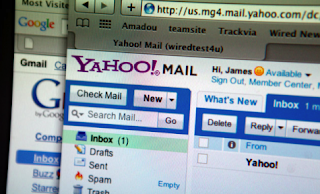
Yahoo prevailed Friday over Colorado federal prosecutors in a legal battle testing whether the Constitution’s warrant requirements apply to Americans’ e-mail.
Saying the contested e-mail “would not be helpful to the government’s investigation,” (.pdf) the authorities withdrew demands for e-mail in a pending and sealed criminal case. For the moment, the move ends litigation over the hotly contested issue of when a warrant under the Fourth Amendment is required for Yahoo and other e-mail providers to release consumer communications to the authorities.
The brouhaha concerned a 1986 law that already allows the government to obtain a suspect’s e-mail from an internet service provider or webmail provider without a probable-cause warrant, once it’s been stored for 180 days or more. The government contended, and then backed off Friday, that it could get e-mail less than 180-days old if that e-mail has been read by the owner, and that the Constitution’s Fourth Amendment protections don’t apply.
Yahoo was backed (.pdf) by the Electronic Frontier Foundation, Google and the Center for Democracy & Technology in challenging the government’s position. It defied a court order to turn over those e-mails to the feds in a Colorado criminal probe that is under seal. Litigation over the topic ensued, and the government blinked in a legal standoff highlighting antiquated privacy laws.
Had the courts adopted the government’s position, (.pdf) the vast majority of Americans’ e-mail would be accessible to the government without probable cause, whenever law enforcement believes the messages would be relevant to a criminal investigation, even if the e-mail’s owner was not suspected of wrongdoing.
Still, the government’s move does not resolve the privacy issue, but merely instead delays it for a later day.flashback: fcc loses net neutrality battle against comcast