


|
|---|
Showing posts with label eff. Show all posts
Showing posts with label eff. Show all posts
Sunday, July 3, 2011
electronic frontier foundation: know your rights

Tuesday, May 3, 2011
fbi tracking "suspects" online
However, the article notes a greater threat posed by a recent FBI proposal. "In February, the FBI urged members of the House Judiciary Subcommittee on Crime, Terrorism and Homeland Security to update the Communications Assistance to Law Enforcement Act (CALEA) and make it easier for authorities to eavesdrop on Internet." CALEA is the same 1994 law that the US administration was not observing just prior to the Iraq war!
Friday, November 19, 2010
end of the internet as we know it?
US Senate Committee in a lame duck Congressional session passed recently the Combating Online Infringements and Counterfeits Act (COICA). Electronic Frontier Foundation, a digital rights group, calls it an 'internet censorship bill'. "Clearly this was funded by media cartels, but this has a lot more to do with Internet censorship as it does about copyright infringement," says Activist Post entry.
In "Stop the Internet Blacklist", Rhode Island State Representative David Segal writes: "COICA creates two blacklists of Internet domain names. Courts could add sites to the first list; the Attorney General would have control over the second. Internet service providers and others (everyone from Comcast to PayPal to Google AdSense) would be required to block any domains on the first list. They would also receive immunity (and presumably the good favor of the government) if they block domains on the second list." Welcome to the Brave New World!
In "Stop the Internet Blacklist", Rhode Island State Representative David Segal writes: "COICA creates two blacklists of Internet domain names. Courts could add sites to the first list; the Attorney General would have control over the second. Internet service providers and others (everyone from Comcast to PayPal to Google AdSense) would be required to block any domains on the first list. They would also receive immunity (and presumably the good favor of the government) if they block domains on the second list." Welcome to the Brave New World!
Tuesday, July 27, 2010
US declares iphone 'jailbreaking' legal over apple objections
 from threat level: Federal regulators lifted a cloud of uncertainty when they announced it was lawful to hack or “jailbreak” an iPhone, declaring Monday there was “no basis for copyright law to assist Apple in protecting its restrictive business model.”
Jailbreaking is hacking the phone’s OS to allow consumers to run any app on the phone they choose, including applications not authorized by Apple.
The Electronic Frontier Foundation asked regulators 19 months ago to add jailbreaking to a list of explicit exemptions to the Digital Millennium Copyright Act’s anti-circumvention provisions.
At stake for Apple is the very closed business model the company has enjoyed since 2007, when the iPhone debuted. Apple says it’s unlawful to jailbreak, (.pdf) but has not taken legal action against the millions who have jailbroken their phones and used the underground app store Cydia.
Apple maintains that its closed marketplace is what made the success of the iPhone possible, and sold more than three billion apps. Apple also told regulators that the nation’s cellphone networks could suffer “potentially catastrophic” cyberattacks by iPhone-wielding hackers at home and abroad (.pdf) if iPhone owners are permitted to legally jailbreak their shiny wireless devices.
Saturday, April 17, 2010
yahoo beats feds in email privacy battle
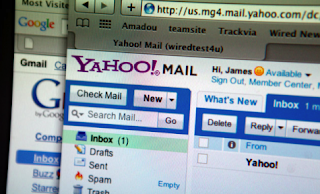 from threat level: Yahoo prevailed Friday over Colorado federal prosecutors in a legal battle testing whether the Constitution’s warrant requirements apply to Americans’ e-mail.
Saying the contested e-mail “would not be helpful to the government’s investigation,” (.pdf) the authorities withdrew demands for e-mail in a pending and sealed criminal case. For the moment, the move ends litigation over the hotly contested issue of when a warrant under the Fourth Amendment is required for Yahoo and other e-mail providers to release consumer communications to the authorities.
The brouhaha concerned a 1986 law that already allows the government to obtain a suspect’s e-mail from an internet service provider or webmail provider without a probable-cause warrant, once it’s been stored for 180 days or more. The government contended, and then backed off Friday, that it could get e-mail less than 180-days old if that e-mail has been read by the owner, and that the Constitution’s Fourth Amendment protections don’t apply.
Yahoo was backed (.pdf) by the Electronic Frontier Foundation, Google and the Center for Democracy & Technology in challenging the government’s position. It defied a court order to turn over those e-mails to the feds in a Colorado criminal probe that is under seal. Litigation over the topic ensued, and the government blinked in a legal standoff highlighting antiquated privacy laws.
Had the courts adopted the government’s position, (.pdf) the vast majority of Americans’ e-mail would be accessible to the government without probable cause, whenever law enforcement believes the messages would be relevant to a criminal investigation, even if the e-mail’s owner was not suspected of wrongdoing.
Still, the government’s move does not resolve the privacy issue, but merely instead delays it for a later day.
flashback: fcc loses net neutrality battle against comcast
Subscribe to:
Posts (Atom)


