


 from telegraph: A leaked internal memo contains unconfirmed reports that one of the detectors at the Large Hadron Collider at CERN, near Geneva, had picked up signals that could be the long sought after particle, called the Higgs boson. One of the main scientific goals of the huge £6 billion atom smasher was to prove the existence of the Higgs boson, a theoretical particle believed to give everything in the universe mass. The particle is a key part of the standard model used in physics to describe how particles and atoms are made up. Rumours that scientists working on the LHC had found evidence of the Higgs boson began to circulate after an supposed internal memo was posted on the internet. But physicists were quick to urge caution over the claims as many candidates for the particle that appear in collision experiments at the LHC are subsequently dismissed on further examination.
|
|---|
Showing posts with label science. Show all posts
Showing posts with label science. Show all posts
Sunday, April 24, 2011
large hadron collider rumoured to have found 'god particle'
from telegraph: A leaked internal memo contains unconfirmed reports that one of the detectors at the Large Hadron Collider at CERN, near Geneva, had picked up signals that could be the long sought after particle, called the Higgs boson. One of the main scientific goals of the huge £6 billion atom smasher was to prove the existence of the Higgs boson, a theoretical particle believed to give everything in the universe mass. The particle is a key part of the standard model used in physics to describe how particles and atoms are made up. Rumours that scientists working on the LHC had found evidence of the Higgs boson began to circulate after an supposed internal memo was posted on the internet. But physicists were quick to urge caution over the claims as many candidates for the particle that appear in collision experiments at the LHC are subsequently dismissed on further examination.

Wednesday, November 3, 2010
large hadron collider 'set to create a mini-big bang'
 from bbc: Since 2009, the world's highest-energy particle accelerator has been smashing together protons, in a bid to shed light on the fundamental nature of matter. But now the huge machine will be colliding lead ions instead. The experiments are planned for early November and will run for four weeks.
The LHC is housed in a 27km-long tunnel on the Franco-Swiss border and is managed by the European Organization for Nuclear Research (Cern). The collider consists of four different experiments and one of them, ALICE, has been specifically designed to smash together lead ions.
The goal of these collisions is to investigate what the infant Universe looked like. Colliding protons at high energies was aimed at other aspects of physics, such as finding the elusive Higgs boson particlesupersymmetry and signs of new physical laws, such as a framework called.
Cern's spokesman James Gillies told BBC News that besides ALICE, the ATLAS and Compact Muon Solenoid (CMS) experiments will also be temporarily colliding ions.
Tuesday, October 12, 2010
uk schools running ufo crash drills
 from dateline zero: There seems to be a growing trend among schools to stage a UFO crash, and then teach students how to react, as well as to “properly” investigate and report on the incident... The latest “UFO drill” took place Wed, Sept 29, at Sandford Primary School in the UK. The kids were treated to a full UFO crash scenario that included wreckage, police tape, and real police officers. (Perhaps it was only lacking men from the government telling the children not to talk about what was seen.) What’s interesting is that “police were on hand to show the children how to properly investigate the UFO crash site.” Um, were any of the officers speaking from experience? A news article at The Weston Mercury elaborates on the role played by the officers:
Teacher and organiser Victoria Shepherd said: “PCSO Wright and PC Church were brilliant. They helped the children secure the scene and talked about what to do in an emergency, how they gathered evidence, how to interview witnesses etc.”Are UFO drills becoming something of a routine part of the curriculum in the UK? It’s certainly becoming more and more of a common event. Each time, it’s a joint exercise put in place by the school and local law enforcement. A similar drill took place in Feb of 2009 when Lanchester Endowed Parochial Primary, in County Durham, staged a surprise “crash” behind the school. In Sept 2008 “children from an Edgware school were made to believe aliens had landed in their playground by teachers and police.” Again, each time it was conducted by the school system and police — teaching children what to do in event of a UFO event. Afterward, the kids are asked to write about their experience.
related: strange signal comes from alien planet, scientist says
Thursday, August 19, 2010
defcon 8/19: flashback flares & jackal hacktivism
 video: top physicist says solar flare would set us back 100yrs*
 sun affects earth more than you might realize*
call it 'operation ajax truth':
iranian activists deface uk genetics website*
19 aug '53 - anglo-american military coup in iran*
'day of the jackal' & 'odessa file' author/journalist blames nsa for wife's laptop hack*
wikileaks says pentagon offers afghan files help*
Thursday, July 22, 2010
scientists find most massive star ever discovered
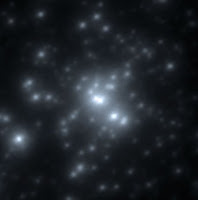 from ap: A huge ball of brightly burning gas drifting through a neighboring galaxy may be the heaviest star ever discovered - 100s of times more massive than the sun, scientists said Wednesday after working out its weight for the first time. Those behind the find say the star, called R136a1, may once have weighed as much as 320 solar masses. Astrophysicist Paul Crowther said the obese star - twice as heavy as any previously discovered - has already slimmed down considerably over its lifetime... it's burning itself off with such intensity that it shines at nearly 10 million times the luminosity of the sun.
Tuesday, March 30, 2010
large hadron collider acheives big bangs after initial problems
lhc particle-punisher in record 7tev hypercollisions
from theregister.co.uk: It's official: as this is written, the most powerful particle collisions ever achieved by the human race are taking place inside the great subterranean detector caverns of the Large Hadron Collider (LHC). An initial hiccup this morning saw an overly-jumpy automatic protection system quench a magnet and dump one of the beams, but boffins at the colossal 27-km machine's controls fought back to re-establish a ring of lightspeed 3.5 tera-electron-volt (TeV) protons in the affected magno-doughnut in time for lunch.
cern hit problems on start of high energy collisions
 from telegraph: Dubbed the world's largest scientific experiment, the giant atom smasher holds the promise of revealing details about theoretical particles and microforces, scientists say. But initial attempts on Tuesday were unsuccessful because problems developed with the beams, said scientists working on the massive machine. That meant that the protons had to be "dumped" from the collider and new beams had to be injected. "It's a very complicated machine and we have ups and downs," said Michael Barnett of Lawrence Berkeley National Laboratory. "Right now we have a down." ... The European Organization for Nuclear Research, or CERN, is trying to use the powerful superconducting magnets to force the two beams to cross, creating collisions and showers of particles. They could have been successful immediately, but such huge machines can be so tricky to run that it could take days.
from theregister.co.uk: It's official: as this is written, the most powerful particle collisions ever achieved by the human race are taking place inside the great subterranean detector caverns of the Large Hadron Collider (LHC). An initial hiccup this morning saw an overly-jumpy automatic protection system quench a magnet and dump one of the beams, but boffins at the colossal 27-km machine's controls fought back to re-establish a ring of lightspeed 3.5 tera-electron-volt (TeV) protons in the affected magno-doughnut in time for lunch.
cern hit problems on start of high energy collisions
from telegraph: Dubbed the world's largest scientific experiment, the giant atom smasher holds the promise of revealing details about theoretical particles and microforces, scientists say. But initial attempts on Tuesday were unsuccessful because problems developed with the beams, said scientists working on the massive machine. That meant that the protons had to be "dumped" from the collider and new beams had to be injected. "It's a very complicated machine and we have ups and downs," said Michael Barnett of Lawrence Berkeley National Laboratory. "Right now we have a down." ... The European Organization for Nuclear Research, or CERN, is trying to use the powerful superconducting magnets to force the two beams to cross, creating collisions and showers of particles. They could have been successful immediately, but such huge machines can be so tricky to run that it could take days.
Subscribe to:
Posts (Atom)


